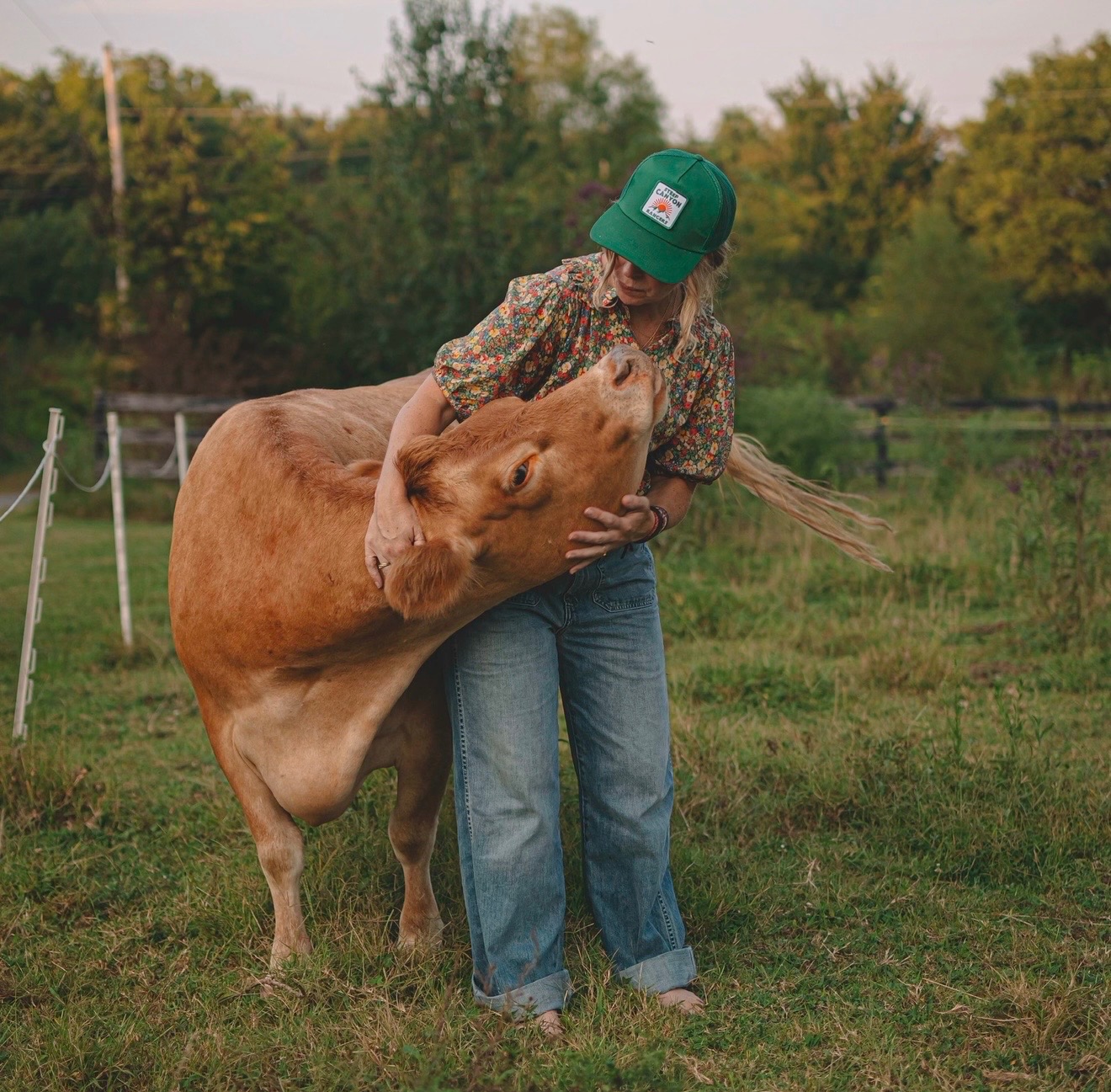
The pumpkin patch is growing well, which is especially satisfying after planting it with autumn in mind. We’ve also left many of our fields unmown this year, and they are now full of brilliant late-summer color. The flowering grasses and wild plants have become a steady source of food for butterflies, bees, and all sorts of other insects. There is something lovely about allowing a field to simply finish its season.
In the garden, we’ve left the cosmos and zinnias to go to seed. The American Goldfinches have noticed. In the evenings, they come to forage among the drying flower heads, balancing on the stems and helping themselves to the seeds. We have helped ourselves to some, too. A basket full of seeds has been gathered and tucked away for spring sowing.
We are still harvesting the last of the tomatoes, and our Egyptian walking onions continue to earn their place in the garden. Once established, they seem determined to provide for our evening meals in perpetuity, which may be one of my favorite qualities in a vegetable.
And there is something else I’ve been quietly working on that I can finally share a little about.
I’ve written an illustrated children’s book called Spring Bird List at Frémont Farm. Right now, I’m approving the final finishing touches on the illustrations, and it is looking so sweet. The story follows the children around the farm as they make a spring bird list, noticing the birds, flowers, fields, and small signs of the season along the way.
It has been especially meaningful to see a story that began here at Frémont Farm become an actual illustrated book. We should be sending it out to publishers shortly. I will keep you posted! xo